Having a flat tire and not knowing how to change
it can make you feel helpless. Changing a tire is easy enough to do, and
everyone should have a general idea of what’s involved:
1 Secure the vehicle so that it won't roll; and roll the spare tire to the scene of the action.
Never change a tire on an incline or hill; always seek a flat surface, even if it means driving on a flat tire. Use bricks, wooden wedges, or metal wheel chocks to block the wheels at the opposite end of the car from the end that is to be raised.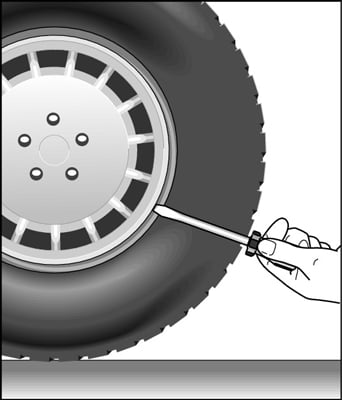
2 Pry off the wheel cover.
You can use a screwdriver to pry the wheel cover off. Just insert the point of the tool where the edge of the cover meets the wheel, and apply a little leverage. The cap should pop off. You may have to do this in a couple of places, as if you were prying the lid off a can of paint.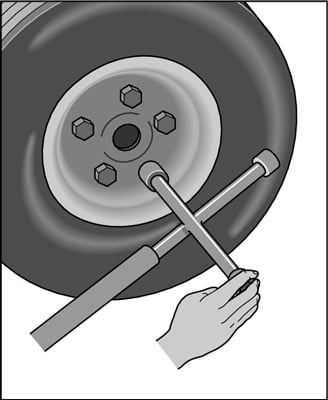
3 Loosen the lug nuts.
You might know this as breaking the lug nuts. Whatever you call it, find the end of the wrench that fits the lug nuts on your vehicle, and fit it onto the first nut. Apply all your weight to the bar on the left. This starts turning the nut counterclockwise, which loosens it. Don‘t remove the lug nuts completely; just get them loose enough to remove by hand after you jack up the vehicle. A hollow pipe and a cross-shaft wrench can loosen the tightest lug nuts.If you have alloy wheels that are held on by lug nuts with delicate finishes, the delicate aluminum or chrome-plated lug nuts need careful handling. They should never be loosened or replaced with power tools that can scratch the delicate finish.
4 Jack up the vehicle about 6 inches off the ground.
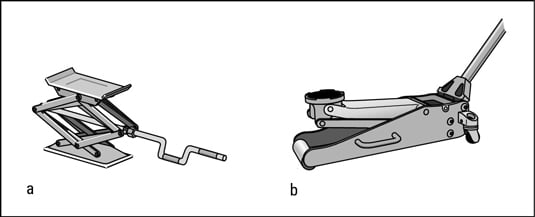
Place the jack securely under the edge of the car. Proper locations may vary among vehicle models, so consult the owner’s manual for the right places to put the jack.If you have a scissor jack (image a), insert the rod or wrench over the knob, and then crank. If you have a hydraulic jack (image b), place the handle into the appropriate location and pump up and down. Use nice, even strokes, taking the jack handle from its lowest point to its highest point on each stroke to cut down on the labor involved.

No comments:
Post a Comment